
It is now a year since the Milford Rail Crossing was ‘upgraded’ from half barriers to full barriers. This was to improve safety as half barriers are statistically more dangerous than full barriers – drivers can’t dodge around full barriers. Inexplicably these new full barriers need a lot more time with the barriers down before a train arrives – Network Rail can’t give a clear explanation why the new object detection cameras at the crossing require the barriers to drop sometimes 7 minutes before a train crosses. The resulting delays to drivers sitting at the barriers for upto 15 minutes is a source of widespread frustration. Journey times have increased and delays are so random that everyone is having to accommodate the prospect of being held for 15 minutes both at the crossing and at Milford crossroads when 30+ vehicles arrive at once. Locals have also voiced safety concerns about the yellow hatched box and queues backing up whilst cars turn right into the car parks.
A number of Milford and Hydestile residents have lobbied Network Rail for an explanation as to why the delays are so much greater than before – possibly because the new kit is less efficient, or merely for operational economies of signalmen remotely monitoring. Network Rail play the “safety is our priority’ card. We not alone in complaining – Petersfield, Farncombe and any crossing with new detection systems have come to the same conclusion. We all have been fobbed off by a well versed network Rail PR department. Jeremy Hunt has said there will be improvement in delays but I very much doubt that will be a tangible improvement on the randomness of the delays.
Our own data on the trigger locations for approaching trains show the barriers come down many minutes before arrival. One slow down-line train triggered the barriers to come down at Milford when the train was over 2 miles away, to the North of Godalming at Borough Road bridge as it slowed down to stop at Godalming Station. After passengers alighted, and 4 minutes later it arrived at Milford, passengers alighted and then only after the train had pulled away did the barriers rise. It begs the question what are the detection systems doing for 5 minutes that requires the barriers to be down so far in advance?
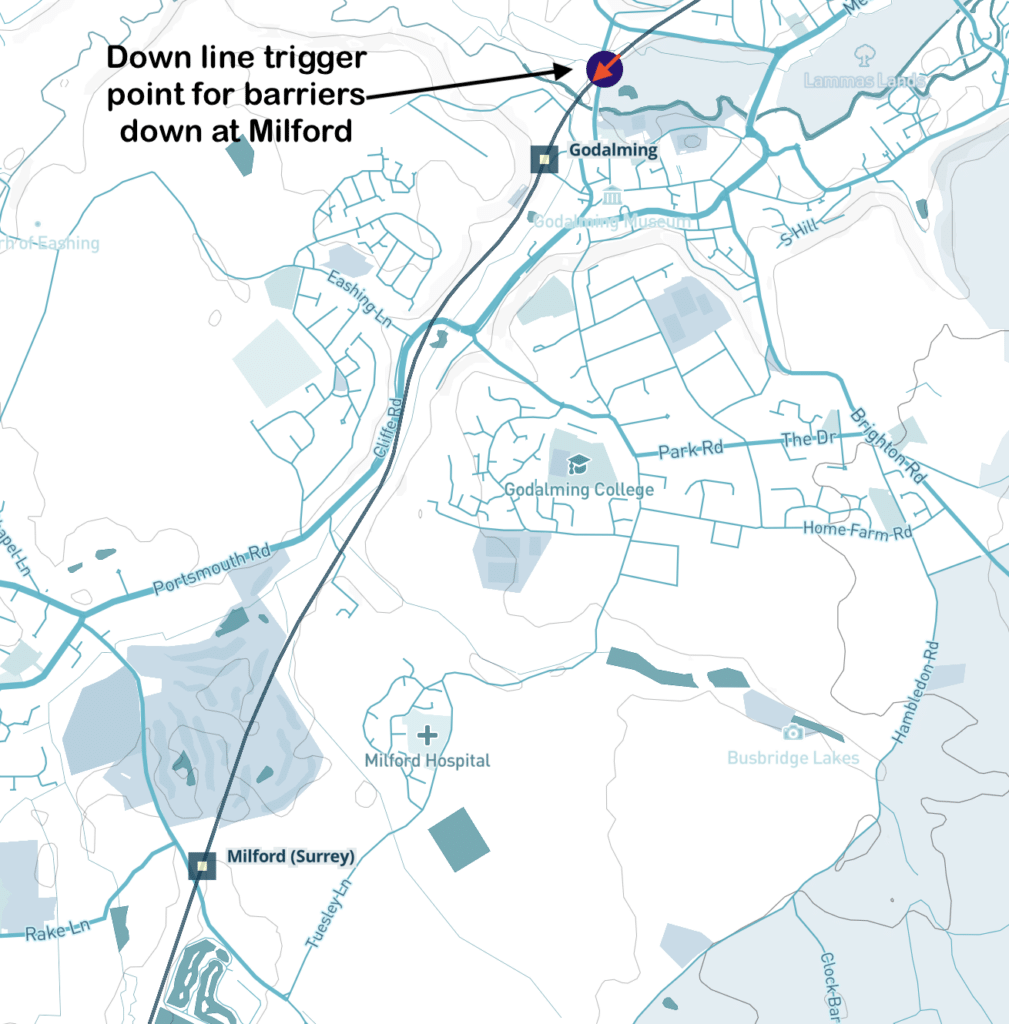
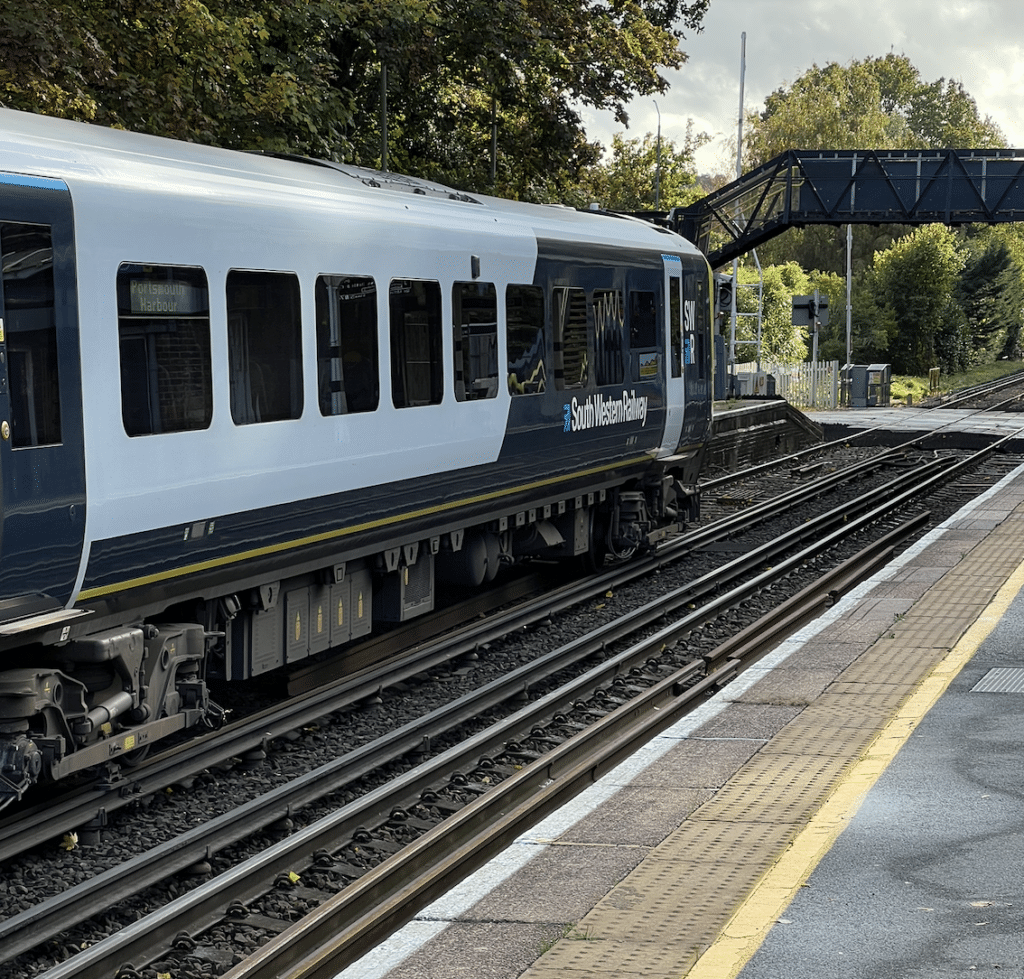
Many of you will have experienced seeing a stationary down train in Milford yet the barriers are down. This has been the practice for many years. However in another case I was on the platform this week and logged the barriers drop 4 minutes before the down train arrived and stopped at Milford- at which point the barriers rose with the train stationary (see photograph). I have never seen that happen before. 30 seconds later the barriers came down again to allow the train to depart downline. So what is the logic to that process of down/up/down up? Are Network Rail fiddling with the phasing to reduce the delay statistics?
It is set to get worse. With the prospect of new housing developments on Station Lane on the remaining Milford Golf Course land and possibly the farm land on the East side of the railway it is clear that the delays at the crossing will have a knock on effect around the area when 300+ new houses are built.
Hambledon residents are the most likely to be impacted by the delays, so I think we need to kick up a hoo-ha about this situation. It is the Milford people who have so far complained the loudest but I have a feeling they have run out of steam after getting no-where with Network Rail. So my questions to Hambledon residents are:
- Have you experienced unjustifiable delays?
- Have you modified your routes and journey times to workaround the delays?
- Have you witnessed errors? – the barriers up whilst a train crosses? (there is a report 15 July of such an occurrence)
- Will you lobby Network Rail through your MP or Surrey Councillor for a technical explanation of the signalling process?
- Are you able to help keep Network Rail’s feet to the fire?
I’d be interested to hear from you.
Paul Osborne Hydestile, [email protected]