Anyone walking along the bridleway across Burgate Farm will encounter a most unexpected feature – one that pays tribute to a fascinating but largely unknown aspect of Hambledon’s history.
Approaching the Loxhill end of the path the walker will already have enjoyed beautiful Surrey Hills scenery, a tranquil landscape of rolling countryside, woodlands and fields. For those familiar with the area, that much would be expected.
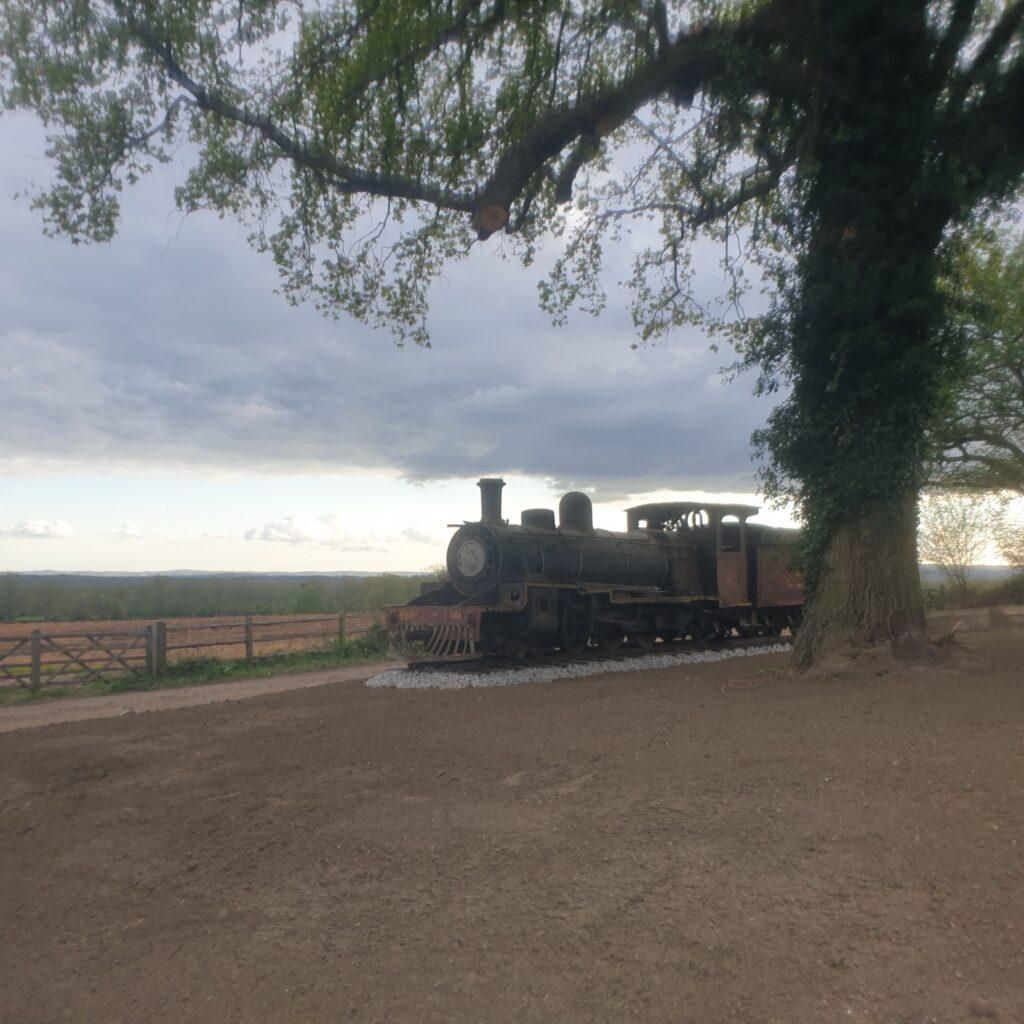
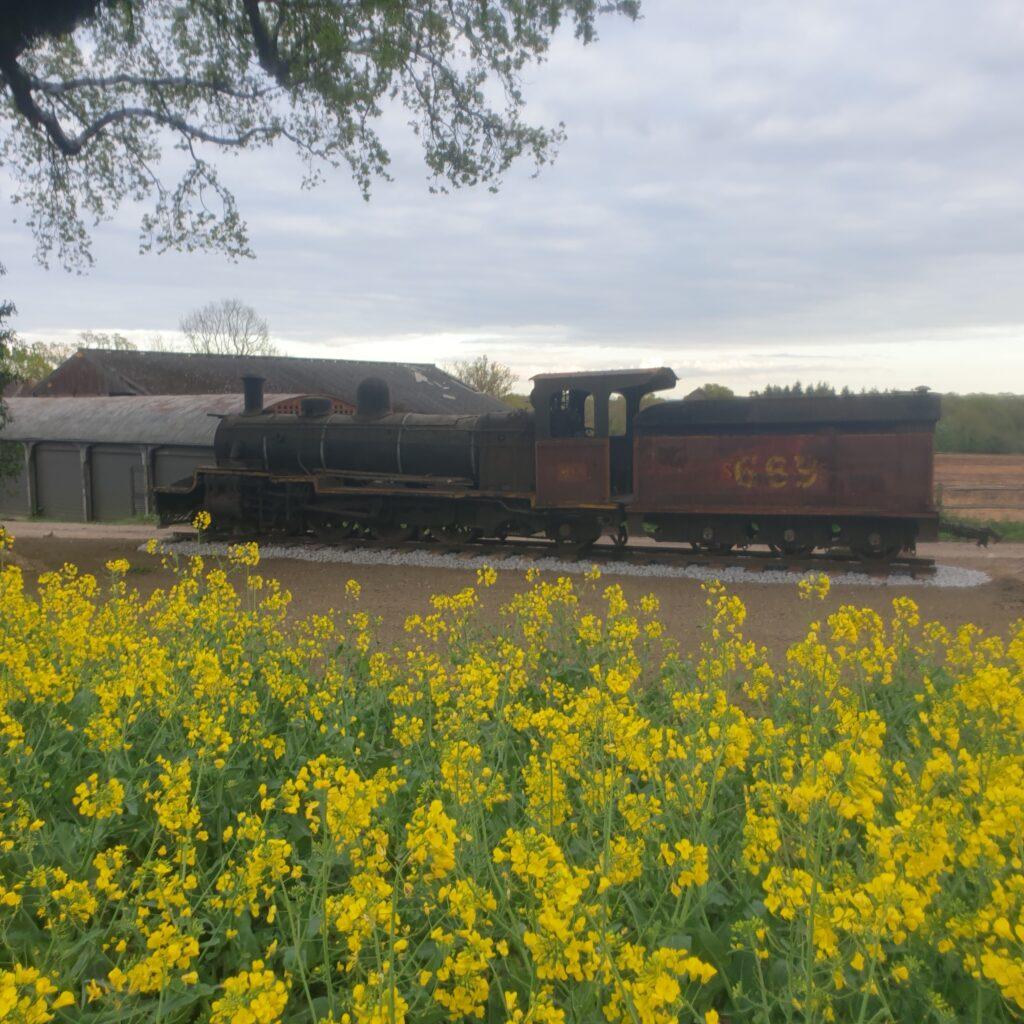
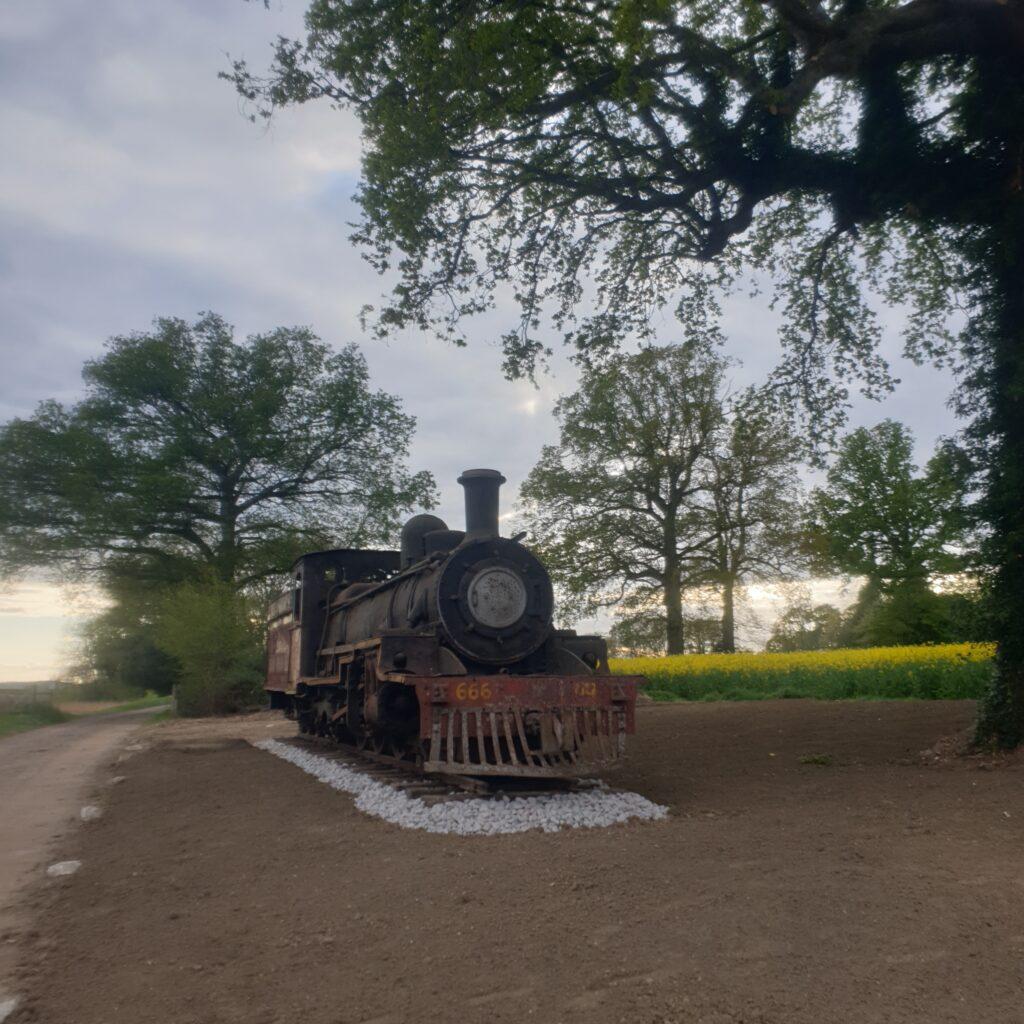
What would not be expected is the steam locomotive, recently installed on a length of railway track, underneath spreading oak trees and against a backdrop of oilseed rape crops. In this sylvan setting, nothing could be more incongruous.
And yet, given the history of this location, it is entirely appropriate. The nearby barn buildings housed a large collection of narrow-gauge locomotives, locked away and hidden by the farm’s owner Peter Rampton.
Steam locomotives were his passion. The engines were British-built and delivered around the world to work in quarries, forestry, tea plantations and mines. As steam locomotion was phased out and these elderly locomotives reached the end of long working lives, Peter set about acquiring as many as he could, travelling widely himself in the process and also employing an agent to scout for engines awaiting their fate in scrapyards in Africa, India, South America and parts of Europe.
As many as 50 were shipped back to the UK, mainly in the 1970s and 80s, and then transported by low-loader to Gorebridge Green Farm, which along with the adjoining Burgate and Markwick Farms, Peter had acquired in the 1960s with money from his family’s business, the Freemans mail order company.
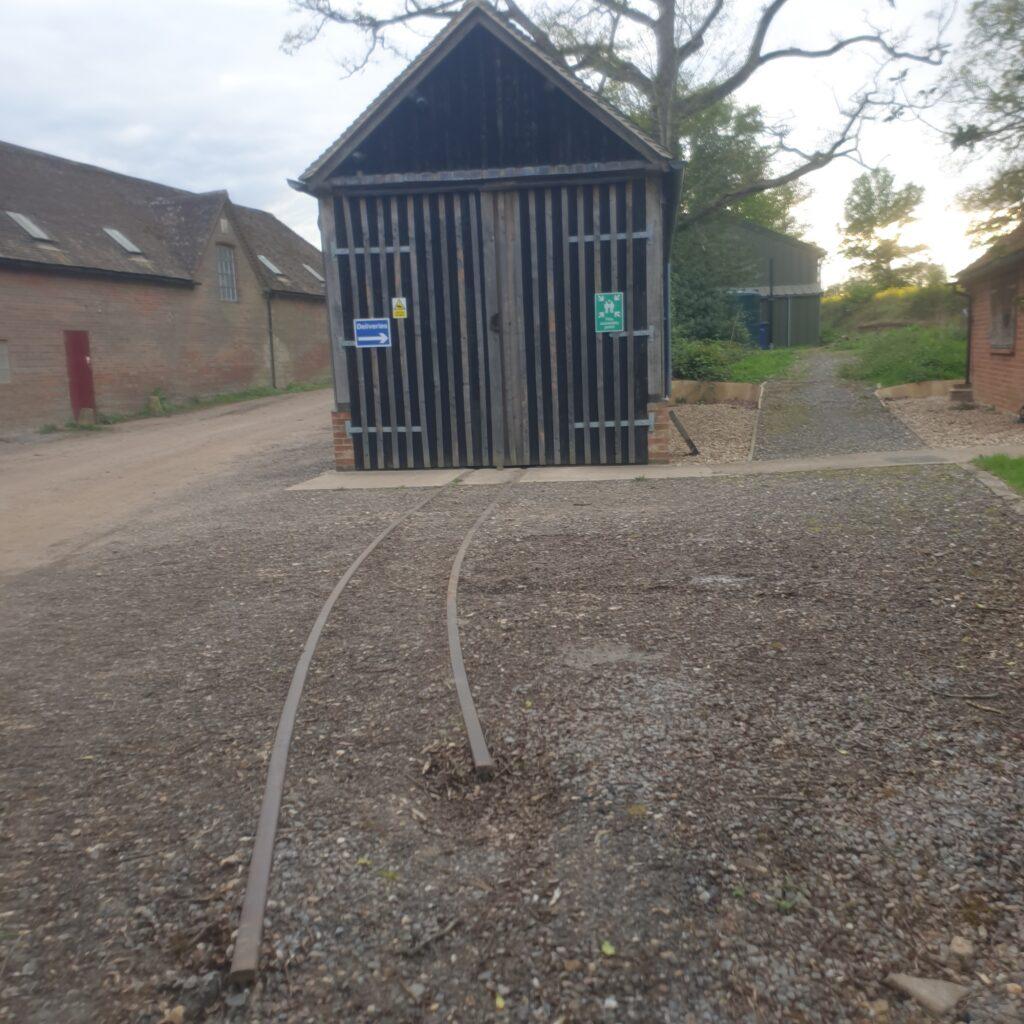
Temporary tracks were laid to shunt the engines into various barns scattered around the site. Once inside, doors were closed and locked and not even a gap was left to reveal what was inside. Peter was not an obsessively secretive man, but he was keen to protect his collection from unwelcome attention.
His staff and friends were all asked not to discuss the locomotives or confirm their existence. However, some enthusiasts got wind of them and many paid fruitless visits only to find rail tracks disappearing, tantalisingly, into the barns but no glimpse of what was inside.
Around the world, it became known as Collection X, with many intrigued to know what it comprised, some even indignant that such a unique collection was not on public view.
Peter’s main purpose was to rescue historic industrial locomotives from the scrapyard and to provide a secure home for them. He did lay a short length of track beside the field leading up to his home, the 16th Century Markwick Farm House and would use this to steam new arrivals before storing them. But any intention to create a public display never reached fruition.
And so they remained. Peter bought the narrow-gauge Vale of Rheidol line in Wales in 1989, operating it as a Trust and it is to this organisation that the bulk of the locomotives passed when Peter died in 2019, aged 85.
In the last few years, one by one, the locomotive have been removed by volunteers. Some are to be put back into steam following restoration, others will go on static display in museums.
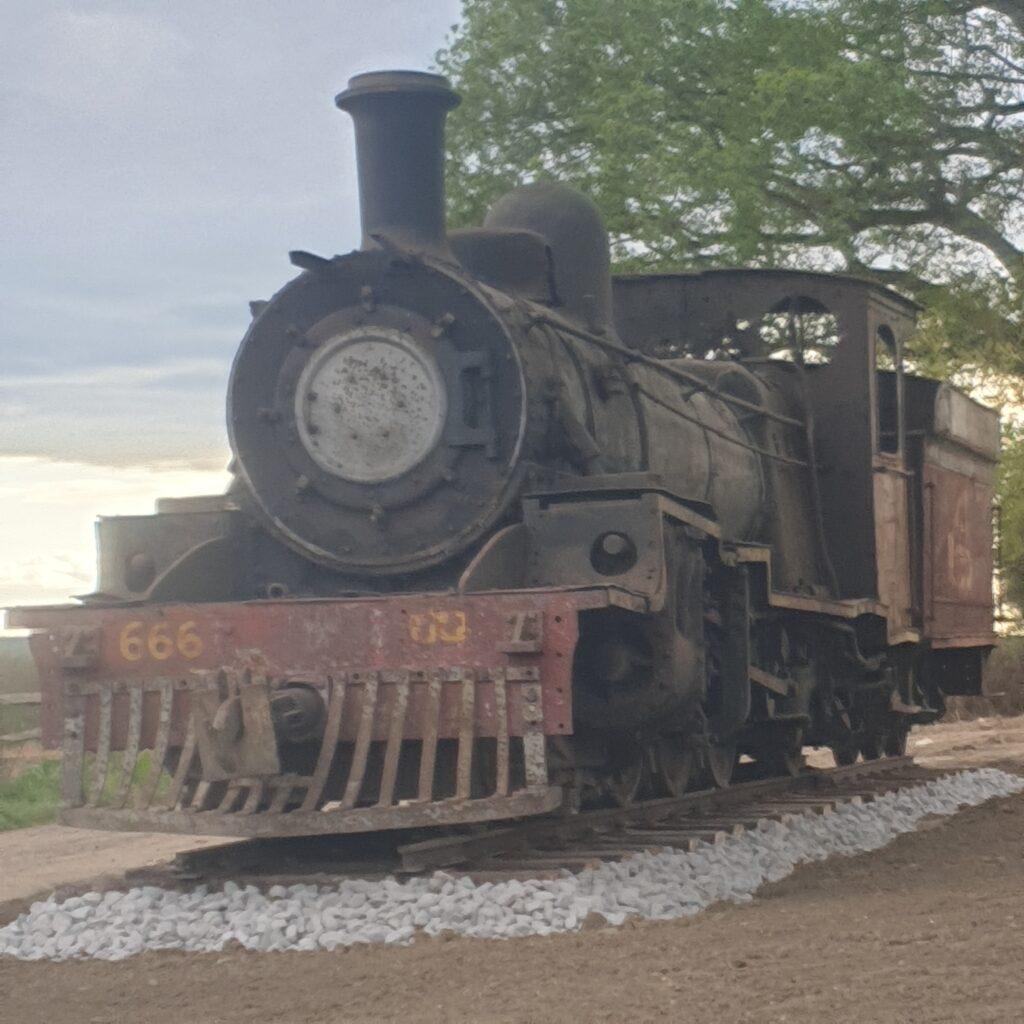
But one remains, standing alone beside the bridleway in tribute to Peter and his remarkable enterprise. It is a 4-6-2 engine, numbered 666 and built by the North British Locomotive Company at its Atlas Works in Glasgow in 1906 from where it was sent to work on the Bengal-Napore Railway in India. It was one of Peter more recent acquisitions, arriving at Gorebridge Green Farm in the 1990s.
The new owners of the farm, aware of the significance of the site, asked for it to go on display as a legacy to Peter’s endeavour.